
Musing on a Crazy World
Vilfredo Pareto’s Theory of Society
Vilfredo Pareto divided the people who actually hold power into two rough types, Lions and Foxes.
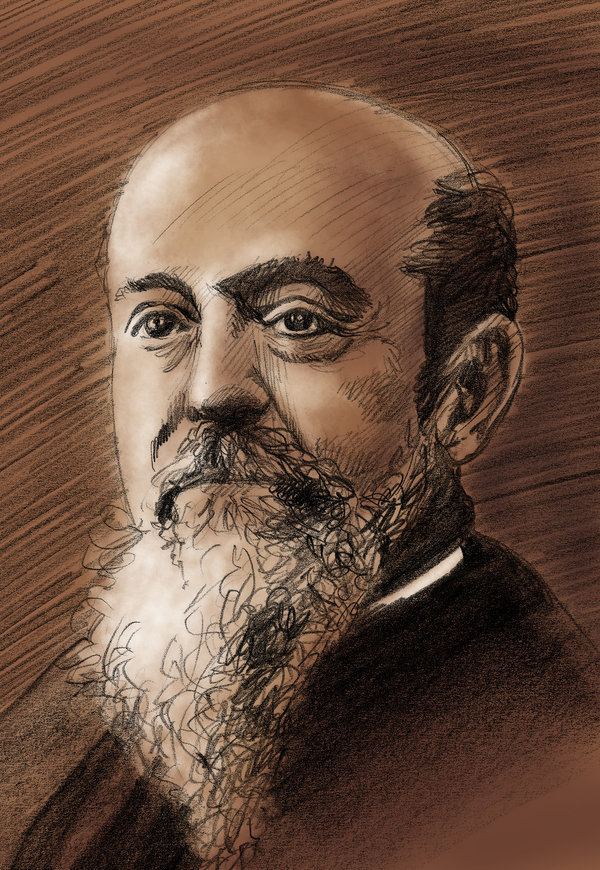
“If you're Noah, and your ark is about to sink, look for the elephants first, because you can throw over a bunch of cats, dogs, squirrels, and everything else that is just a small animal and your ark will keep sinking. But if you can find one elephant to get overboard, you're in much better shape.”
Vilfredo Federico Damaso Pareto was an Italian polymath, whose areas of interest included sociology, civil engineering, economics, political science, and philosophy.
Italian sociologist Vilfredo Pareto had a blunt way of looking at history. Every society, he argued, is run by a small elite. That elite never stays the same. Over time the old rulers get soft or rigid, new ones push them out, and the cycle starts again. He called history “a graveyard of aristocracies.”
Pareto divided the people who actually hold power into two rough types. The “lions” prefer order, tradition and decisive action. They are willing to use force, or at least firm control, when they think it is needed. The “foxes” prefer cleverness, deals, new ideas and persuasion. They are good at rearranging people and arguments; they are less keen on open confrontation. A healthy ruling group needs a mix of both. When foxes take over for too long, government tends to become slick, rhetorical and reluctant to impose hard choices. Problems of order pile up until someone more decisive steps in. Democracies are especially good at producing long stretches of fox rule.
New Zealand’s politics since the mid-1970s fits the pattern almost too neatly.
Robert Muldoon, National prime minister from 1975 to 1984, was the last clear lion. He ran the country through sheer force of personality. He spoke for the “ordinary bloke,” packed halls with “Rob’s Mob,” and specialised in aggressive “counterpunching.” His policies were hands-on and state-directed: wage and price freezes, big industrial “Think Big” projects, subsidies and tight economic controls. He wanted to defend a settled way of life and was happy to confront unions, critics and anyone else who got in the way. For a while it worked. Then the style turned rigid. The economy stalled, younger free-market National MPs grew restless, and cleverer people outside the government started to look more attractive. The 1984 snap election ended the lion phase.
What followed was a pure fox takeover. The Fourth Labour Government, driven by Finance Minister Roger Douglas, tore up the old settlement at speed. The dollar was floated, regulations and subsidies were scrapped, state assets were sold, and taxes were rewritten. Douglas called the method “quantum leaps”—move fast enough that the people who would lose privileges never get organised. This was not rule by force. It was rule by clever combinations of ideas and institutions. A new elite of financiers, corporate managers and technocrats rose with it. David Lange was the public face; the real shift was toward the fox style.
Later governments largely lived inside the new framework rather than reversing it. Jim Bolger and Jenny Shipley kept the market reforms and added some discipline. Helen Clark perfected the art of managerial fox rule under MMP: careful coalitions, incremental social policy, and a “Third Way” balance that left the open economy untouched. John Key was the master of the modern fox approach. He was popular, pragmatic and skilled at political deals. He practised “incremental radicalism” and “quiet achievement,” managed crises calmly, and kept business talent close. He reassured rather than confronted. The governing class got very good at combinations and consent; it grew less willing to use hard force or defend older habits against rapid change.
Jacinda Ardern took the fox style further. Her strongest asset was rhetorical skill—kindness, empathy, inclusion, “they are us,” “team of five million.” These slogans worked as powerful stories that secured public support and smoothed over the fact that government remained an elite managerial project. She could be decisive in a crisis (Christchurch, the early COVID lockdowns), but the longer pattern relied on persuasion, moral framing and expanding state programmes rather than sustained firmness. When crime, disorder and fiscal pressure rose, the limits of that approach became obvious: a government skilled at talking found it harder to impose order once the talking stopped working.
Christopher Luxon’s coalition, in office since 2023, looks like a partial swing back. Luxon himself still speaks the language of corporate management, but the government has put more weight on crime, spending restraint and push-back against some progressive combinations. ACT brings a sharper, more force-oriented edge; New Zealand First adds traditionalist and populist tones. It is not a return to Muldoon. It is the usual response after a long period of fox dominance: problems of order accumulate, and people more willing to act decisively gain influence.
The overall story matches what Pareto expected. New Zealand moved from a rigid lion phase under Muldoon, through the sharp fox break of Rogernomics, into a long stretch of clever but increasingly soft fox rule. The governing elite became excellent at deals, rhetoric and consent, and weaker at the older habits of force and persistence. The 2023 change is an incomplete correction, not a revolution. The hierarchy stays; only the mix of people and instincts at the top keeps circulating. The cycle is messy and open-ended, but the path from the 1970s to today is a clear local example of how democratic governments decay under prolonged fox rule—and how they eventually get pushed back toward balance.
References
Pareto, Vilfredo. The Mind and Society (English translation 1935; original 1916). The main source for the ideas of residues, lions, foxes and elite circulation.
Pareto, Vilfredo. The Rise and Fall of the Elites (1968 edition). Shorter earlier essay on the same theme.
Te Ara – The Encyclopedia of New Zealand. Clear entries on Muldoon, Rogernomics, and later prime ministers.
Gustafson, Barry. His Way: A Biography of Robert Muldoon (2000). Detailed account of Muldoon’s style and its limits.
Goldfinch, Shaun. “Remaking New Zealand’s Economic Policy” (2002). On the small elite that drove the 1980s reforms.
What’s Been on Your Mind?
Every perspective adds something to the story. Share what this post brought to mind, or keep reading for another take on the little things that make up a life.