
Musing on a Crazy World
A review of the who really manages the levers of power in our Country
Who Really Holds the Levers? Power, Parties and the Limits of the Backbench in New Zealand.
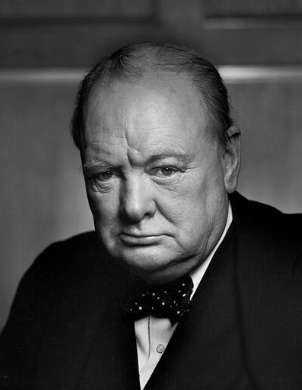
“Some men change their party for the sake of their principles; others change their principles for the sake of their party.”
Sir Winston Churchill
In New Zealand’s parliamentary system, the public face of politics is the elected MP. Constituents contact them with individual problems, they attend local events, and they speak in the House. On major policy questions, however, the room for independent action is narrow. Major parties operate as disciplined machines.
Policy platforms are developed through internal processes involving the party organisation, leadership and caucus. Once settled, those positions are enforced by the whip. MPs who consistently diverge risk demotion, lower list rankings, or the withdrawal of party support at the next election. This is not unique to New Zealand; it is the normal operating logic of modern party government. The question is where the decisive influence actually sits.
The machinery of discipline
Party whips exist to ensure attendance, manage speaking lists, negotiate House business and, crucially, cast votes on behalf of the party. An unauthorised absence or a public break with the party line can trigger internal discipline. Caucus meetings (usually held weekly when the House is sitting) are where MPs discuss tactics and, in government, endorse legislative programmes. Individual MPs can raise constituency concerns and argue for adjustments, but the broad direction is set higher up. List rankings, which determine who enters Parliament under MMP if the party vote exceeds the number of electorate seats won, are controlled by party processes rather than open local votes. Electorate candidates are selected by local members after board approval of nominations, but the party organisation retains significant leverage over who is viable.
National & Christopher Luxon’s path to power
Christopher Luxon entered Parliament in 2020 after winning the safe National seat of Botany. He secured the nomination in late 2019 following the departure of Jami-Lee Ross, defeating several other contenders in a vote of local delegates. Former Prime Minister John Key had encouraged him to stand; comparisons between the two were common. Luxon had no prior elected experience. After the 2020 election he served briefly as a shadow spokesperson. In November 2021, following the caucus removal of Judith Collins, he was elected leader unopposed once Simon Bridges withdrew. The interval from entering Parliament to becoming leader was 409 days—one of the shortest on record for a major party. He then led National into the 2023 election and became Prime Minister in a three-party coalition.
No public evidence has established a single external “string-puller” who engineered the sequence. Key’s encouragement is documented; Luxon’s business background (Air New Zealand CEO after senior Unilever roles) aligned with National’s traditional preference for managerial competence. Once in the leadership, priorities reflected the party’s established platform: economic growth, fiscal restraint, crime, and infrastructure. These were shaped by the parliamentary leadership, caucus discussions, the party’s policy processes, and coalition negotiations with ACT and New Zealand First. Large donations to National have long come disproportionately from property, construction, finance and related sectors. Whether and how those flows influence specific decisions is contested; the pattern of funding is public through Electoral Commission returns.
Labour
Labour’s Policy Council (comprising elected members, MPs and other representatives) prepares the policy platform and manifesto; regional conferences feed in proposals. The New Zealand Council is the governing body outside Parliament. In government, caucus has a substantial role in endorsing the legislative programme and, historically, in electing cabinet members. Discipline remains tight; MPs are expected to support the platform.
ACT
ACT’s constitution gives the Board responsibility for overseeing policy formation and for appointing the leader, candidates and list. It operates a Policy Forum involving the parliamentary team, members and staff. Leader influence is strong, consistent with the party’s relatively small size and focused ideological profile.
New Zealand First
New Zealand First has been dominated by its founder and leader, Winston Peters, since its creation in 1993. The party’s constitution vests governance and management of non-parliamentary affairs in the Board. The Board includes the President, Party Secretary, the Leader, the Deputy Leader, five members elected at the Annual General Meeting, and a representative from the Members’ Council (which itself comprises the President, Secretary, regional chairs and the chair of Young New Zealand First).
The Leader and Deputy Leader are selected by the Parliamentary Division when one exists; the Board fills the roles if there is no parliamentary presence. In practice, Peters has remained leader continuously. The party’s founding principles state that MPs are required to vote with the party only on a vote of confidence in a government of which New Zealand First is a member; on other issues not covered by party policy, an MP’s first duty is said to be to the electorate and the nation. In operation, however, the party has historically exercised tight discipline under the leader. Past periods in Parliament have seen significant caucus fractures and defections when internal tensions rose. Major policy positions and negotiating stances are driven by the leadership, with the organisational structure supporting rather than independently directing the parliamentary team.
Te Pāti Māori
Te Pāti Māori operates under a co-leadership model. The constitution requires two co-leaders (one male and one female), drawn preferentially from sitting MPs. The National Council is the key organisational body, with representation from each electorate and from the MPs. Management is delegated to a National Executive (which includes the President, co-vice-presidents and the co-leaders), subject to ratification by the National Council. Decisions are intended to be made by consensus consistent with tikanga, falling back to majority if needed.
The party’s structure places significant formal authority outside the parliamentary caucus. This was demonstrated in 2025 when the National Council voted to expel two sitting MPs (Mariameno Kapa-Kingi and Tākuta Ferris) for alleged breaches of the party’s kawa (constitution). The co-leaders described the process as involving mediation, electorate branches, and consultation; the expelled MPs and their supporters characterised aspects of the leadership as overly centralised. Policy development is framed around the party’s kaupapa and Te Tiriti o Waitangi commitments, with the National Council and leadership holding decisive roles. Electorate branches provide input on candidates and local matters, but major direction and disciplinary power rest with the national organisational bodies.
Green Party of Aotearoa New Zealand
The Green Party maintains one of the more structured and member-oriented internal systems among parliamentary parties. Its constitution describes a Te Tiriti-based framework (Te Waka) that emphasises grassroots participation. Governance and strategic direction sit with Kaunihera (Council), which includes co-leaders, party co-convenors, policy co-convenors and other representatives, and which operates under the instruction of general meetings. Policy is developed through dedicated processes (including a Policy Hub coordinated by policy co-convenors) involving member assemblies, working groups and ratification steps. The party requires that one co-leader be a woman and one be Māori.
Parliamentary Caucus is responsible for implementing party policy at the national level and coordinating parliamentary activity. MPs are expected to promote and follow Party Policy, subject to any conscientious objection notified when they became a candidate. The party also requires MPs to contribute a percentage of their salary back to the organisation. While the formal policy process is more bottom-up and member-driven than in most other parties, once positions are adopted the parliamentary team operates under collective discipline. Local and electorate structures feed into candidate selection and policy input, but the combination of Kaunihera, policy processes and caucus norms keeps major direction coordinated rather than left to individual MPs.
The Opportunities Party (TOP / Opportunity)
The Opportunities Party has been unusually explicit about board authority. Its constitution gives the board primary responsibility for policy development through a Policy Committee whose members are appointed by the board (and which includes the leader). Caucus is required to confer with the board and be guided by its directions. A 75 percent board majority can overrule a caucus decision judged to prejudice the party’s Charter. Governing arrangements negotiated by caucus also require 75 percent board approval. The board can appoint or remove the leader by the same majority. These provisions attracted public attention in 2026; the party subsequently indicated it was reviewing or adjusting aspects of board power over caucus as it prepared for potential parliamentary representation. The structure was designed, in part, when the party had no MPs and sought to prevent a future parliamentary wing from drifting from its founding principles. It remains a clear illustration of organisational control sitting outside the elected representatives.
Summary
Across these three parties the same underlying pattern holds as with National, Labour, ACT and the Opportunities Party: elected MPs handle constituency work and advocate for the party’s positions, while the decisive levers on major policy, list placement, leadership and discipline sit with a mix of the parliamentary leadership/caucus and the extra-parliamentary party organisation. The precise balance varies—more leader-centric in New Zealand First, more organisationally assertive in Te Pāti Māori’s recent practice, more process-heavy and member-involved in the Greens—but independent major-policy initiative by individual backbench MPs remains limited in all cases
Across the major parties the pattern is consistent. Local members have a voice in candidate selection and can submit policy remits. Once candidates are elected, the decisive levers on major policy, list placement and parliamentary behaviour sit with the combination of parliamentary leadership, caucus (under the whip), and the extra-parliamentary party organisation. External funding, professional advisers, and, in government, the public service and coalition partners further shape what is feasible. Individual MPs remain important for constituency service and for testing the temperature of local opinion, but they function primarily as advocates and implementers of positions developed and defended by the party apparatus.
So “who is really in control.”
Power is distributed and contested inside each party’s institutions rather than residing solely with the people who appear on the ballot. Voters choose between packaged programmes; the packages are assembled, prioritised and enforced by the organisations that stand behind the candidates.
What’s Been on Your Mind?
Every perspective adds something to the story. Share what this post brought to mind, or keep reading for another take on the little things that make up a life.